
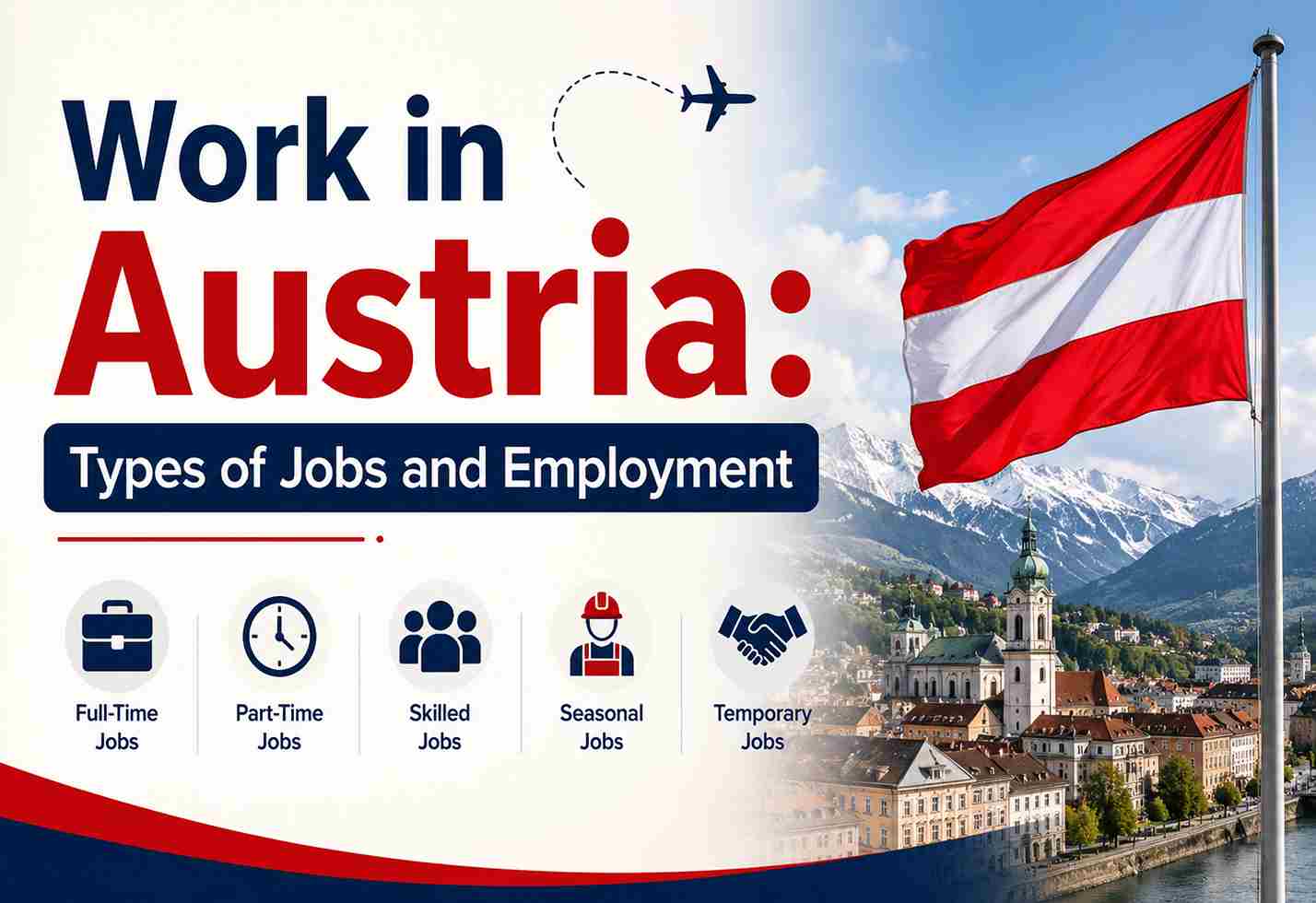
Work in Austria: Types of Jobs and Employment
If you want to work in Austria, it is important to know how jobs and work contracts work. Austria has many types of jobs. You can work full-time, part-time, for a short time, as a freelancer, or as a seasonal worker.
Your type of job can affect your salary, working hours, holidays, insurance, and other rights.
This simple guide explains the main types of employment in Austria.
Work in Austria for International Workers
Austria has jobs in many areas. International workers can find jobs in areas such as tourism, hotels, restaurants, agriculture, construction, business, education, and other fields.
The rules for working in Austria depend on your nationality.
EU, EEA, and Swiss citizens generally have similar work rights to Austrian citizens.
People from countries outside the EU usually need the correct residence and work permission before they can start a job in Austria.
Full-Time Jobs in Austria
A full-time job is one of the most common ways to work in Austria.
A full-time worker works the normal hours agreed with the employer. The worker usually has a regular salary and important work rights.
These rights can include:
- Paid holidays
- Health insurance
- Accident insurance
- Pension insurance
- Unemployment insurance
- Protection under work laws
The exact working hours and salary depend on the job and the work agreement.
Part-Time Jobs in Austria
A part-time job means working fewer hours than a full-time worker.
For example, a person may work a few hours each day or only some days of the week.
Part-time jobs are common in Austria. They can be useful for students, parents, and people who need flexible work hours.
Part-time workers normally have work rights like full-time workers. However, some rules can depend on the number of hours and the type of job.
Fixed-Term Jobs in Austria
A fixed-term job has a clear end date.
For example, an employer may give you a contract for six months or one year.
The job normally ends when the agreed time is finished.
Fixed-term jobs are often used for:
- Temporary jobs
- Short projects
- Seasonal work
- Jobs where an extra worker is needed
Before starting the job, check the start date and end date in your contract.
Freelance Jobs in Austria
Freelance work is different from a normal employee job.
A freelancer provides a service to a person or company. The freelancer usually has more freedom in how the work is done.
Examples of freelance work can include:
- Language teaching
- Writing
- Translation
- Consulting
- Lecturing
Freelancers may not have all the same rights as normal employees.
For example, some benefits may not be automatic. Therefore, you should read your work agreement carefully before starting freelance work.
Small Jobs in Austria
Austria also has small jobs with a monthly income limit.
In 2026, the limit for marginal employment is €551.10 per month.
People in this type of job have accident insurance. The employer must also register the worker with the health insurance system.
A worker may be able to get health and pension insurance voluntarily.
The income limit can change in the future, so always check the latest official information.
Self-Employment in Austria
Self-employed people work for themselves.
They do not work as normal employees for one employer.
Some self-employed workers include:
- Writers
- Translators
- Consultants
- Teachers
- Lecturers
Self-employed people are responsible for their own work and business activities.
They may also need to deal with taxes and social insurance.
The rules depend on the type of work.
Apprenticeship Jobs in Austria
An apprenticeship is a way to learn a job while getting practical work experience.
An apprentice works and learns at the same time.
An apprenticeship agreement must be made in writing.
Apprentices can receive:
- Health insurance
- Accident insurance
- Pension insurance
- Unemployment insurance
Young apprentices also have special protection under Austrian work laws.
Seasonal Work in Austria
Seasonal work is a job for a certain time of the year.
This type of work is common in Austria’s tourism and farming sectors.
Common seasonal jobs include:
- Hotel jobs
- Restaurant jobs
- Kitchen jobs
- Farm jobs
- Tourism jobs
- Forestry jobs
Seasonal work can be a good option for people who want temporary work in Austria.
Agency Jobs in Austria
Some people work in Austria through a work agency.
A work agency finds workers for companies that need employees.
The worker may work at another company while the agency handles the employment contract.
Agency workers have social insurance protection. Special rules can also apply to these jobs.
Volunteer Work in Austria
Volunteer work is different from a normal paid job.
A volunteer usually works as part of a training or learning program.
Volunteers normally do not have the same salary rights as regular employees.
Before joining a volunteer program, check what the program provides and what your responsibilities are.
Employment Contracts in Austria
An employment contract explains the main conditions of your job.
The agreement can be written or, in some cases, made verbally.
However, having the job conditions in writing is safer and easier for the worker.
Your work agreement should explain important information such as:
- Your job
- Your salary
- Working hours
- Workplace
- Start date
- Contract length
- Holidays
- Notice period
Always read your contract before you start working.
What Is a Dienstzettel?
If you do not receive a full written employment contract, you should receive a document called a Dienstzettel.
This document gives you important information about your job.
It can include:
- Your name
- Employer’s name
- Start date
- Workplace
- Job position
- Salary
- Extra payments
- Payment date
- Holiday days
- Working hours
- Notice period
- End date of a fixed-term job
Keep this document in a safe place.
Working Hours in Austria
Your normal working hours should be clear in your employment conditions.
The number of hours can depend on your job and industry.
A collective agreement may also set rules about salary, working hours, holidays, and other work conditions.
If you are not sure about your working hours, ask your employer before starting the job.
Social Insurance When You Work in Austria
Social insurance is an important part of working in Austria.
Depending on your type of work, you may have protection for:
- Health
- Accidents
- Pension
- Unemployment
The rules are not the same for every worker.
For example, a normal employee, freelancer, self-employed person, and small-job worker can have different insurance rules.
How to End a Job in Austria
There are different ways to end a job in Austria.
A job can end when:
- A fixed-term contract finishes
- The worker resigns
- The employer ends the job
- The worker and employer agree to end the job
- The worker is dismissed
The notice period depends on the type of job and contract.
Always check your employment agreement before leaving your job.
Probation Period in Austria
Some jobs have a probation period.
During this time, the employer or worker can normally end the employment without giving a reason.
For normal employment, an agreed probation period generally cannot be longer than one month.
Apprenticeships can have different rules.
Resigning From a Job in Austria
If you want to leave your job, you may need to give notice.
The notice period depends on your type of employment and the rules that apply to your job.
Before resigning, check your contract.
It is also a good idea to keep a copy of your resignation and other important work documents.
Dismissal in Austria
An employer can end an employment relationship in certain situations.
Some types of dismissal can end the job immediately.
For example, serious problems at work can be a reason for immediate dismissal.
If you think your dismissal is not legal, you can ask an employment adviser or the Austrian Chamber of Labour for help.
Documents You Should Get When Your Job Ends
When your job ends, you may receive important work documents.
These can include:
- Salary information
- Proof of employment
- Insurance information
- Payslips
- Information about your work and pay
- Employment reference
Keep these documents. You may need them for another job or for official purposes.
Tips for People Who Want to Work in Austria
If you want to work in Austria, follow these simple steps:
- Find a legal job.
- Check if you need a work permit.
- Read your employment contract.
- Check your salary.
- Check your working hours.
- Check your holiday rights.
- Understand your insurance.
- Keep copies of your documents.
- Ask questions if something is not clear.
- Follow Austrian work and immigration rules.
Is Working in Austria a Good Choice?
Austria can be a good country for people who want to work and build a career.
There are different types of jobs and employment contracts. You can choose full-time work, part-time work, seasonal work, freelance work, or other options depending on your situation.
However, foreign workers should first make sure that they have the right permission to work in Austria.
Final Words
Work in Austria can offer different opportunities for local and international workers. Austria has full-time jobs, part-time jobs, seasonal jobs, freelance work, apprenticeships, agency jobs, and self-employment.
Each type of job has different rules.
Before accepting a job, check your salary, working hours, contract, insurance, holidays, and notice period. If you are from outside the EU, also check the work and residence rules that apply to you.
Understanding these rules can help you find a legal job and avoid problems when you work in Austria.















Open Doors Russia Scholarship 2027
Want to apply for the Open Doors Russia Scholarship? Get professional guidance and registration support from our team.
🟢 Chat With Us on WhatsApp
Get in touch today for registration assistance.
Useful Scholarship Guides
Helpful guides for your scholarship application
Study Opportunities by Country
Explore scholarships and study opportunities in popular countries.

Hi
درخواست کار
سید احمد شاه حسینی هستم میخواهم ویزه کاری اتریش راه بگیرم خواهشمندم همکاری نمود در افغانستان با بیکار و فقر دست پنجه نرم میکنم
Abdullahkhaksar602@gmail.com
I am interested in your country.