
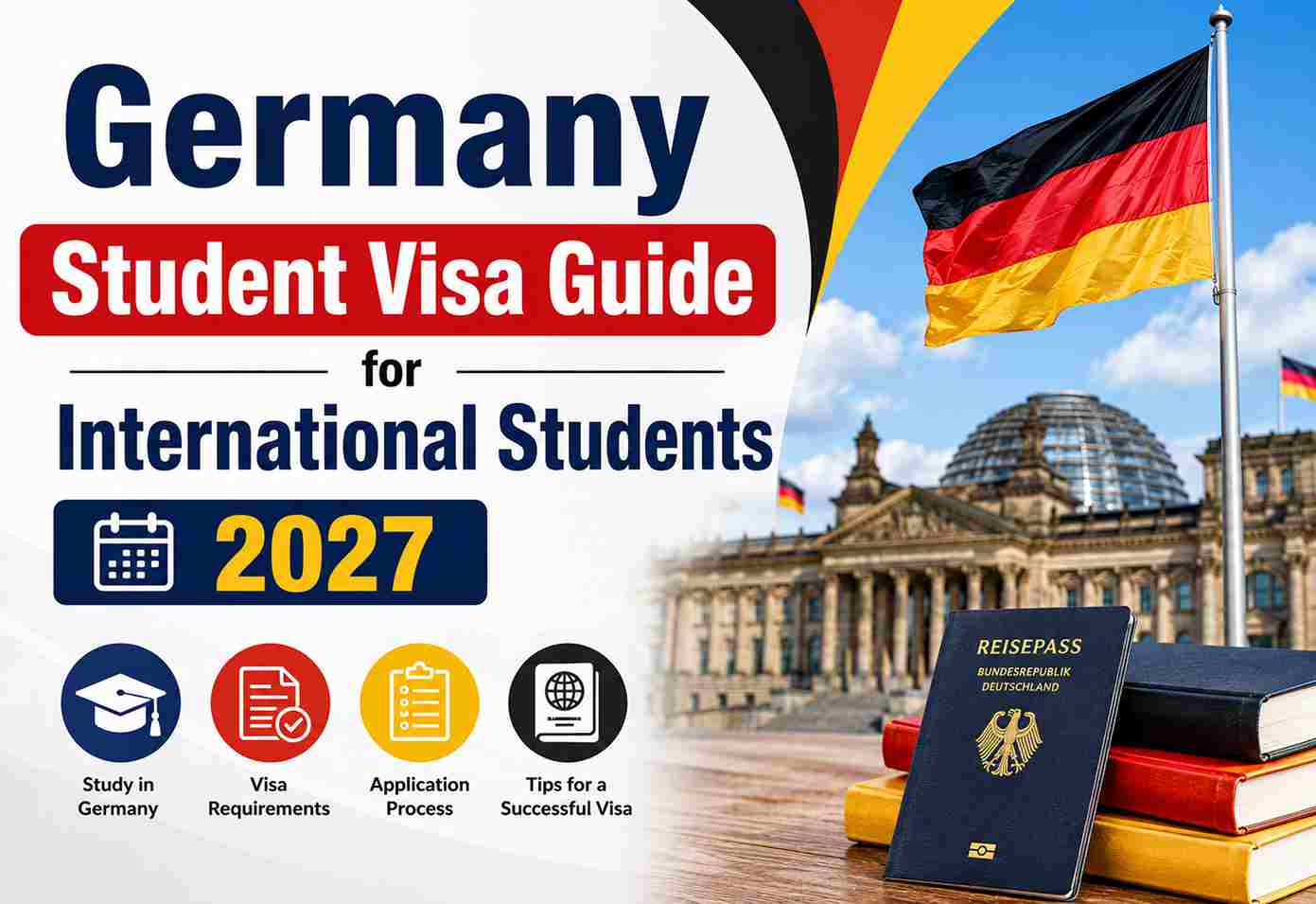
Germany Student Visa Guide for International Students 2027
Germany is one of the most popular study destinations for international students because of its high-quality universities, affordable education, and many English-taught programs. Students from different countries can apply for a German student visa if they receive admission from a recognized university and meet the visa requirements.
This guide explains the Germany student visa process, requirements, documents, financial proof, language requirements, and important steps for international students.
What is a Germany Student Visa?
A Germany student visa is a legal document that allows international students to enter Germany and continue their studies at a recognized university.
The visa is usually issued for students who:
- Have received admission from a German university
- Want to study a bachelor’s, master’s, or doctoral program
- Need to attend a preparatory course or language program before university
Who Needs a Student Visa for Germany?
Students from many countries outside the European Union (EU) and European Economic Area (EEA) need a student visa before traveling to Germany.
Students from countries such as:
- United States
- Canada
- Australia
- Japan
- South Korea
may enter Germany without a visa but need a residence permit for longer stays.
Students from most other countries must apply for a student visa at the German embassy or consulate in their home country.
Main Requirements for Germany Student Visa
To get a German student visa, applicants usually need to meet these requirements:
1. University Admission Letter
You need an official admission letter from a recognized German university.
The admission can be for:
- Bachelor’s degree
- Master’s degree
- PhD program
- Preparatory studies
Without university admission, you usually cannot apply for a regular student visa.
2. Recognized Educational Qualification
Your previous education certificate must be accepted in Germany.
Examples:
- High school certificate for bachelor studies
- Bachelor degree for master studies
- Master degree for doctoral studies
Students can check their qualification through official German databases.
Language Requirements for Studying in Germany
Language requirements depend on your chosen study program.
German-taught programs:
Most universities require German language skills.
Common requirements:
- B2 level German language certificate
- Sometimes C1 level for specific programs
Accepted certificates may include:
- TestDaF
- DSH
- Goethe Certificate
English-taught programs:
Students usually need proof of English ability.
Common certificates:
- IELTS
- TOEFL
- Other accepted English tests
Always check the exact requirements of your university.
Financial Requirements for Germany Student Visa
International students must prove that they can pay for their living costs in Germany.
Students can show financial proof through:
- Blocked bank account (Sperrkonto)
- Scholarship certificate
- Financial guarantee from a person in Germany
- Other approved financial documents
The blocked account amount changes regularly. Students should check the latest amount before applying.
Required Documents for Germany Student Visa
Prepare these important documents:
- Valid passport
- Completed visa application form
- University admission letter
- Educational certificates
- Language certificate
- Proof of financial resources
- Health insurance
- Passport-size photos
- Curriculum vitae (CV)
- Motivation letter
- Visa appointment confirmation
The German embassy may request additional documents.
Step-by-Step Germany Student Visa Process
Follow these steps to apply for a student visa:
Step 1: Choose a Study Program
Find a suitable program at a German university.
Check:
- Admission requirements
- Language requirements
- Application deadlines
Step 2: Apply to a German University
Submit your application through:
- University website
- uni-assist platform (if required)
Upload all required documents.
Step 3: Receive Admission Letter
After acceptance, the university sends an admission letter.
This document is needed for your visa application.
Step 4: Prepare Visa Documents
Collect all required documents before your embassy appointment.
Make sure:
- Documents are complete
- Translations are available if required
- Certificates are properly prepared
Step 5: Book Visa Appointment
Contact the German embassy or consulate in your country.
Submit:
- Application form
- Documents
- Passport
- Visa fee
Step 6: Attend Visa Interview
During the interview, you may answer questions about:
- Your study plans
- University choice
- Future goals
- Financial situation
Answer clearly and honestly.
How Long Does Germany Student Visa Processing Take?
Visa processing time depends on:
- Your country
- Number of applications
- Embassy workload
- Completeness of documents
It may take several weeks or months.
Students should apply early before their study start date.
Health Insurance Requirement for Students
Health insurance is required for studying in Germany.
Students must show proof of valid health insurance when enrolling at the university.
Health insurance helps cover:
- Doctor visits
- Medical treatment
- Hospital services
Working While Studying in Germany
International students can work during their studies.
Students are generally allowed to work:
- Up to 140 full working days per year
- Up to 280 half working days per year
- Part-time student jobs
Working can help students support their living expenses.
Visa After Graduation in Germany
After completing your studies, you can apply for a residence permit to find a job.
Graduates can usually stay in Germany for:
- Up to 18 months for job searching
After finding qualified employment, students may apply for:
- Work residence permit
- EU Blue Card
Visa for Students Who Do Not Have University Admission
Students who have not received university admission may apply for a visa to search for a university place.
Requirements may include:
- Recognized school certificate
- Language skills
- Proof of financial support
This visa allows students to stay in Germany for a limited period while searching for a study place.
Common Reasons for Student Visa Rejection
A German student visa may be rejected because of:
- Incomplete documents
- Weak financial proof
- Incorrect information
- Missing language requirements
- Unclear study plans
To avoid problems:
- Prepare documents carefully
- Follow embassy instructions
- Provide correct information
Tips for International Students Applying for Germany Visa
- Start your application early
- Check university requirements carefully
- Prepare financial documents before applying
- Learn basic German language
- Keep copies of all documents
- Do not submit false information
- Follow official embassy instructions
Benefits of Studying in Germany
Germany offers many advantages for international students:
- High-quality education
- Many public universities with low tuition fees
- International study programs
- Opportunity to work during studies
- Career opportunities after graduation
- Safe and modern living environment
Conclusion
Germany is an excellent destination for international students who want quality education and better career opportunities. The student visa process requires proper preparation, complete documents, financial proof, and meeting university requirements.
Students should start early, choose the right program, and carefully follow the German visa application process to increase their chances of success.
For more information, visit the official website
Click here for Germany scholarships.











Open Doors Russia Scholarship 2027
Want to apply for the Open Doors Russia Scholarship? Get professional guidance and registration support from our team.
🟢 Chat With Us on WhatsApp
Get in touch today for registration assistance.
Useful Scholarship Guides
Helpful guides for your scholarship application
Study Opportunities by Country
Explore scholarships and study opportunities in popular countries.

“Hello, I am from Afghanistan and I am interested in applying for this scholarship. Please provide more details. Thank you.”
Caught it up
Keep the money
Mohammad tahir yosufi
I wanna continue my master degree in faculty of economy
ویزه
I am from Afghanistan and I interested for this scholarship
Sdudite viza
Save my name, email, and website in this browser for the next time I comment.
yes der Adresse
how can apply
Tanks to the s
WAhid Sadat
0730559159
Pashto
English
Hello, I want to live legally in your country and give me asylum. My life here in Afghanistan is very difficult. I hope you accept my legal request.
hello
Hello, Habibullah.Graduated from an Afghan university with a degree in literature. I want to continue my studies in your country. If possible, please accept my request. To serve my community in the future through my education. Thank you.
ماته ترکیه برسونوکی شامل شم
Sgtjjkkteechjx
I am very interested in this scholarship opportunity. I would like to know more about the eligibility requirements, application process, and deadline. Thank you for sharing this valuable opportunity.
Hello, I hope you are doing well and staying healthy. I am an Afghan boy, and I want to immigrate to another country so that I can continue my education. I have finished high school, and I would like to study abroad. Please help me. I’m speaking english language
Thanks